复旦大学当代中国研究中心成立:
复旦大学社会科学高等研究院举行成立一周年纪念大会
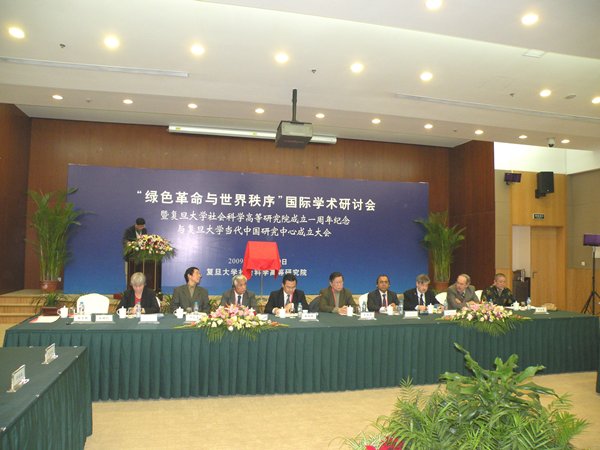
2009年12月20日上午11点,复旦大会社会科学高等研究院(以下简称“高研院”)在复宣酒店四楼报告厅举办了高研院成立一周年纪念暨复旦大学当代中国研究中心(以下简称“当代中心”)成立大会。出席大会的嘉宾有:神户大学副校长中村千春(Nakamura Chiharu)、联合国大学副校长兼高研院院长戈文丹·帕拉伊尔(Govindan Parayil)、德国伊比利亚美洲研究所主任芭芭拉·格贝尔(Barbara Göbel)、比利时布鲁塞尔当代中国研究中心主任古斯塔夫·杰拉茨(Gustaaf Geeraerts)、新西兰国立当代中国研究中心主任黄晓明、加州大学洛杉矶分校东亚系主任胡志德(Theodore D. Huters)、华东师范大学思勉人文高等研究院常务副院长许纪霖,以及当代中心首批特聘研究员清华大学人文与社会高等研究中心执行主任汪晖、中国人民大学美国研究中心主任时殷弘、北京大学人类学教授王铭铭、日本神户大学大学院国际文化学研究科教授王珂、华东师范大学冷战史研究中心主任沈志华、浙江工商大学文艺理论创新研究中心主任吴炫、复旦大学国际关系与公共事务学院教授陈明明、复旦大学经济思想与经济史研究所所长韦森、复旦大学社会发展与公共政策学院副院长张乐天、复旦大学社会发展与公共政策学院教授任远等。
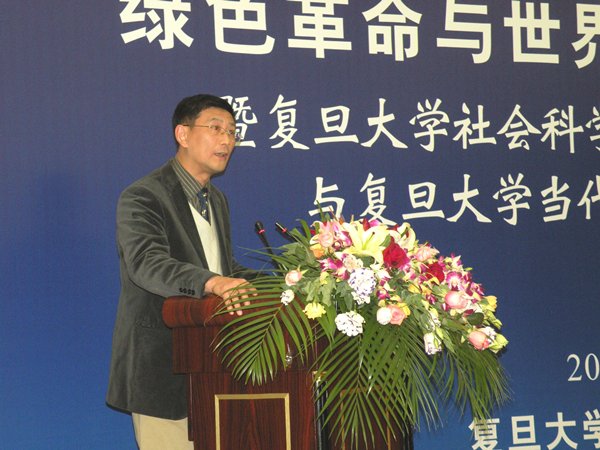
复旦大学文科科研处处长杨志刚教授主持了纪念大会和当代中心成立大会。
高研院学术顾问、复旦大学党委书记秦绍德因临时安排未能莅临现场,但他特别委托杨志刚教授宣读了他的贺词。秦书记在贺信中代表复旦大学欢迎来自世界各地的与会学者,希望当代中心能在当代中国研究领域搭建起交流、沟通和对话的平台,聚焦国家经济社会发展中的重大问题,涌现丰富的研究成果,为推动中国学术走向世界作出应有的贡献。
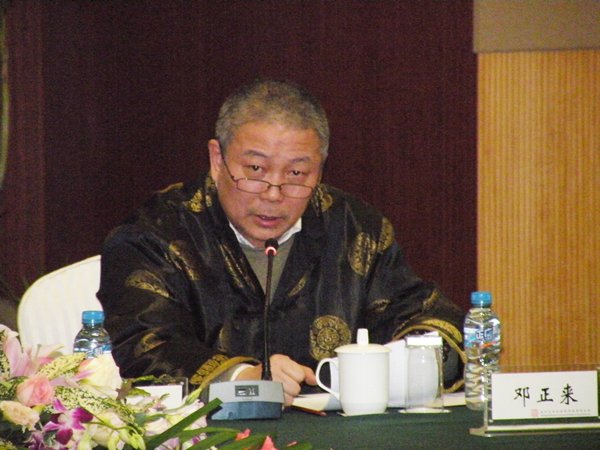
接着,复旦大学特聘教授、高研院院长、当代中心主任邓正来教授代表高研院和当代中心致辞。邓教授指出,在高研院成立一周年之际,高研院能够成立附设于高研院但以复旦大学的名义运作的复旦大学当代中国研究中心不仅充分说明了我们过去一年所取得的成绩,更说明了诸位领导和同道、特别是复旦大学领导对我们的大力支持!他强调,社会科学的文化依存性决定了它必然具有地方性,而这在根本上意味着:我们只能“用中国化的学术成果促成国际化的影响”,亦即要用中国特色、中国风格和中国气派的社会科学作品走向世界,而绝不可能用“西方化”的社会科学作品走向世界。谈及未来规划和学术理想,邓教授指出,当代中心将秉承“学术为本、追求卓越”的学术理念,确立“根据中国、走向世界”的学术定位,坚持走“问题导向、跨学科研究”的研究路径,努力以对当下中国问题的跨学科深度理论探究走向世界,以基于中国立场和视角对全球化时代世界秩序的理论建构走向世界,同时推动中国优秀的哲学文化传统走向世界。
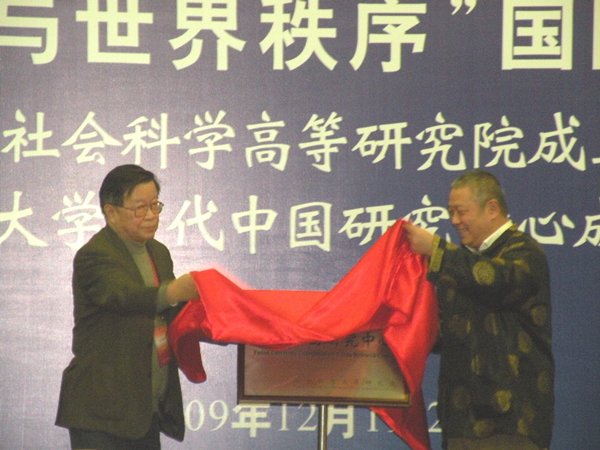
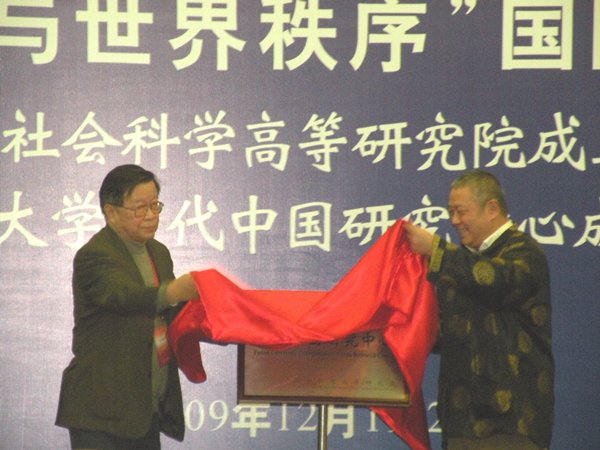
在热烈的掌声中,复旦高研院学术顾问、复旦大学特聘资深教授朱维铮先生和邓正来教授共同为当代中心揭牌。
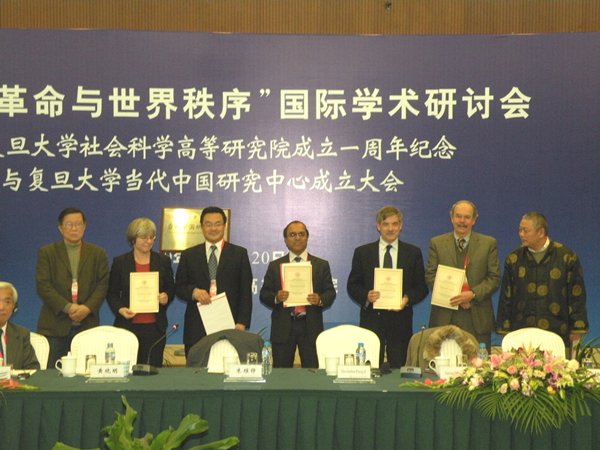
朱维铮教授和邓正来教授为Barbara Göbel, Govindan Parayil,Gustaaf Geeraerts,Theodore D. Hunters,黄晓明等五位教授颁发了当代中心国际顾问委员会委员聘书。
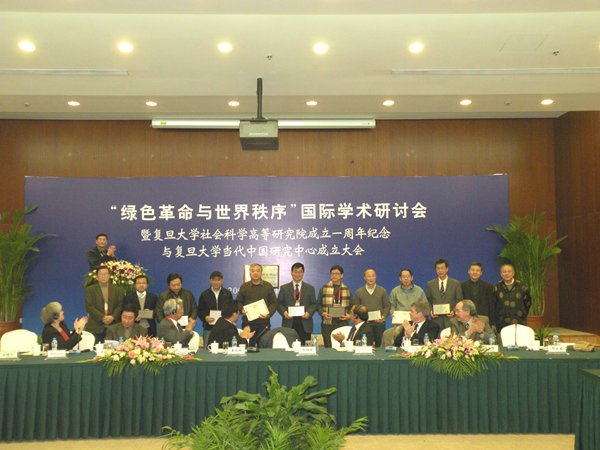
朱维铮教授和邓正来教授还为当代中心副主任王柯、王铭铭以及汪晖、时殷弘、沈志华、吴炫、陈明明、韦森、张乐天和任远等到会的首批特聘研究员颁发了聘书。
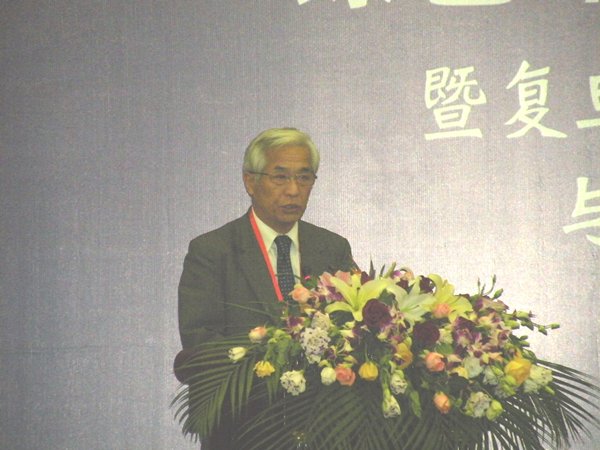
日本神户大学副校长中村千春(Nakamura Chiharu)教授在致辞中希望当代中心能为世界提供对当今中国最新的实质的深度认识。他认为,人们需要变化并且当下世界、特别是价值观和生活方式也正在变化之中。所有这些为我们提出了一个重要的问题,即面对未来,我们应当保留和改变什么。事实上,关于这个问题的答案,除非大多数人都同意,否则很难形成有效力的共识。他希望当代中心的研究能够帮助人们对这一大多数人都关心的复杂问题形成更为深刻的认知。Nakamura Chiharu教授指出,针对诸如绿色革命和全球秩序等一系列根本性的问题,不仅需要各学科内部的深入研究,更需要进行跨学科的研究,其中进行理解问题的思路的创新这一工作尤为关键。
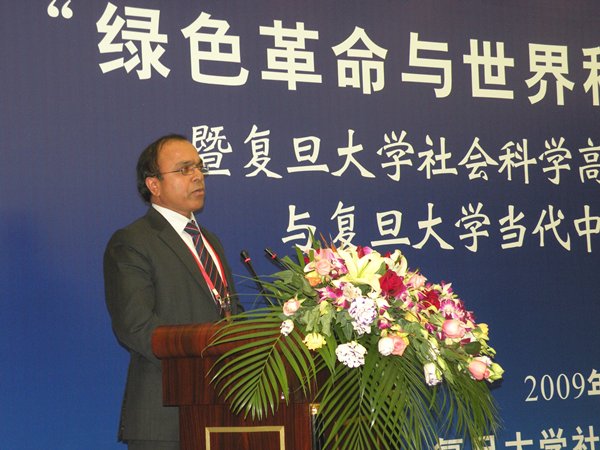
联合国大学副校长兼高等研究院院长戈文丹•帕拉伊尔(Govindan Parayil)教授则表示非常荣幸能成为当代中心的国际顾问委员会委员。他指出,联合国大学及其高研院旨在推广“以科技推动可持续发展”这一理念,希望通过与复旦大学的广泛合作,在此基础上针对大家都关心的理论问题,拓展交流领域,丰富交流内容。他相信,当代中心旨在运用中国哲学社会科学的研究来与世界进行实质性的学术对话,期待双方相互沟通和交流能够越来越多、越来越好。
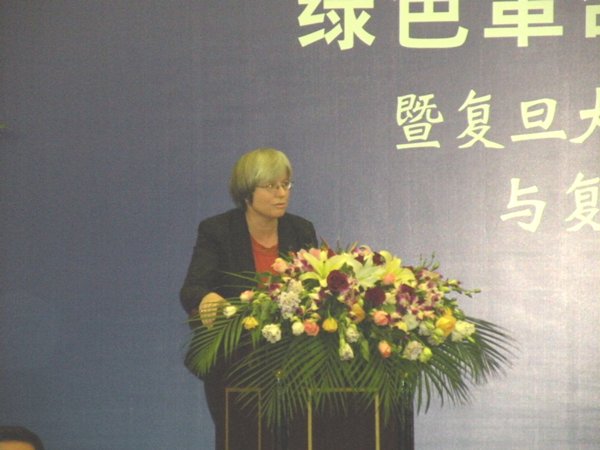
德国伊利比亚美洲研究所主任巴巴拉•格贝尔(Barbara Göbel)教授在致辞中强调对全球化趋势的考察和对全球化理论的研究离不开对各个地方的具体社会、文化、政治的背景性考察,其所从事的拉丁美洲研究旨在通过个案的研究揭示出某种趋势和变化的可能性。她希望通过与当代中心从事的中国问题研究形成比较、交流和互动。巴巴拉•格贝尔教授希望以后与复旦高研院和当代中心的合作交流以一种跨区域研究的、以问题导向为重点的学术方式进行。
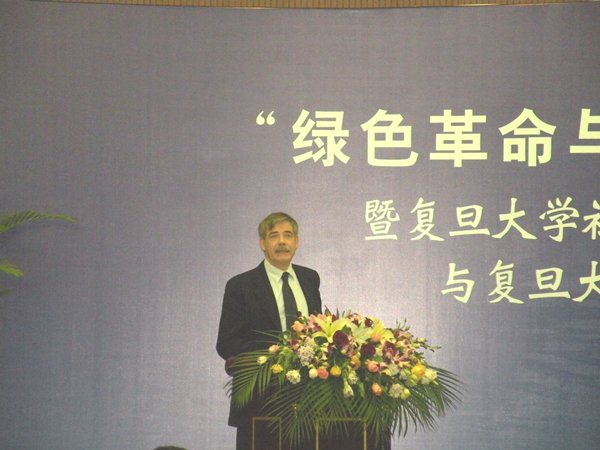
比利时布鲁塞尔当代中国研究中心主任古斯塔夫•杰拉茨(Gustaaf Geeraerts)教授指出,伴随着中国将成为世界上更为重要的力量,更加需要对其独特的发展内道路进行分析与研究。基于中国发展带来的不仅是经济发展的贡献,而且也正在改变着国家与社会的身份和定位,例如中国正在构建的和谐社会,这是一项涉及极广的综合性复杂工程。所有这些都值得中外中国研究学界认真研究。他特别希望能和高研院、当代中心开展进一步的合作研究。
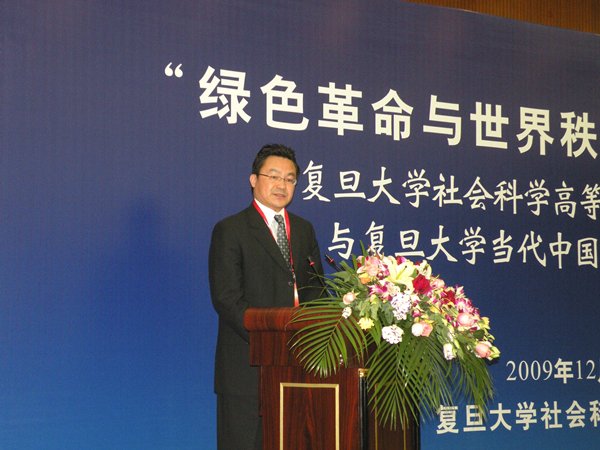
新西兰当代中国研究中心主任黄晓明教授在致辞中描述了当代中心将要面临的历史使命和发展方向,其中包括如何通过中国社会科学自己的概念体系解释、分析中国自己的发展道路等问题。黄教授回顾了他十多年来与邓正来教授探讨学问的经历,希望当代中心能在邓正来教授的领导下关注中国乃至世界普遍关心的问题,深入挖掘问题的实质,取得丰硕的研究成果。
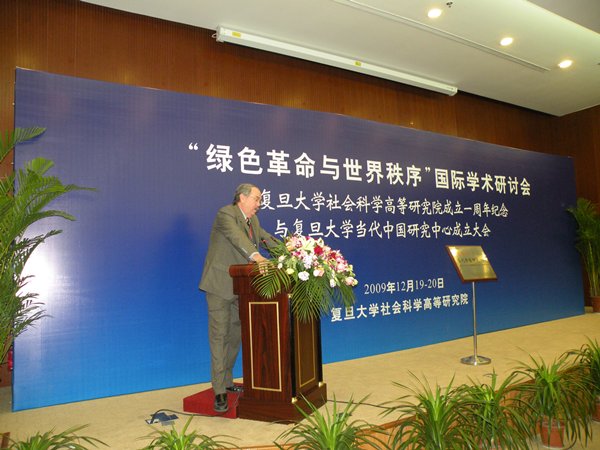
加州大学洛杉矶分校东亚系主任胡志德教授宣读了高研院特聘讲座教授、美国加州大学洛杉矶亚洲研究所主任王国斌教授的贺信。在贺信中,王教授说他相信“中国学术界此一盛举,应能为未来国际学术界提供重要贡献,也将为整合中国的学术力量,融入国际主流人文社会科学研究圈,提供了一个很好的平台。”他同样也希望“加州大学洛杉矶分校亚洲研究所,能够与当代中国研究中心密切合作,推动研究生培训工作的开展以及学术研究的繁荣。”
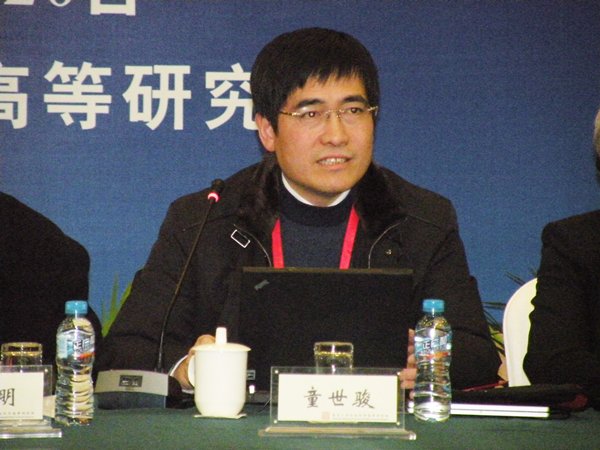
上海社科院党委副书记兼哲学研究所所长童世骏教授发来了贺信。童教授在贺信中指出:“无论是因为当代中国的重要,还是因为当代中国的复杂,当代中国的优秀学者都必须齐心协力,携手合作,在同一个研究中心之中,在不同的研究机构之间,使当代中国人更加无愧于古代中国的祖先,也更加有功于未来中国的后代。”
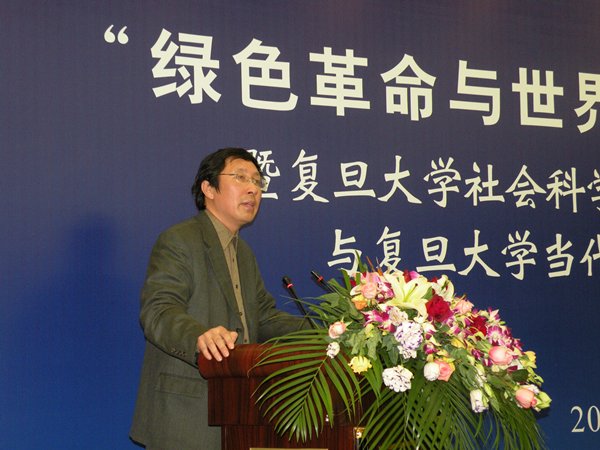
华东师范大学思勉人文高等研究院常务副院长许纪霖教授指出:复旦高研院在整个一年中的学术成绩有目共睹,它在全球视野的大背景下,开展了系列性学术活动,请来了一批国际知名学者来高研院交流,同时又不是单纯地跟随国际潮流,而是有强烈的中国意识和中国关怀。许教授希望复旦高研院和当代中心以后能够比翼双飞,继续给复旦、上海乃至中国学术带来新气象和新面貌。
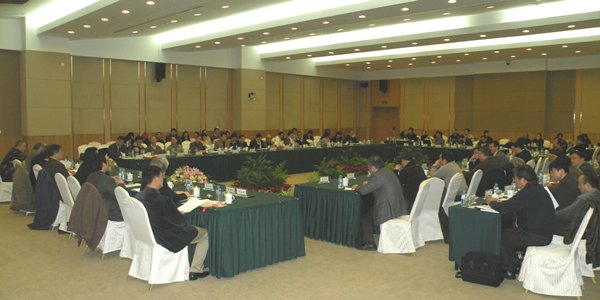
据悉,当代中心附设于高研院但以“复旦大学”的名义运作。该中心将以复旦大学人文社会科学各个相关院系为平台,以“国际化”、“跨学科”为特色,以“重新发现中国”和“推进对当代中国的深度研究”为学术理念,以高研院和加州大学洛杉矶分校亚洲研究所、比利时布鲁塞尔当代中国研究中心和新西兰当代中国研究中心等国外著名中国研究学术机构为核心,以其他国际著名中国研究机构为网络,努力建成中国社会科学走向世界的国际平台和国际当代中国问题研究的交流、沟通、协调与合作平台。
附1:贺信与致辞
秦绍德书记发给复旦大学当代中国研究中心的贺信
贺 信
值此当代中国研究中心成立之际,我代表学校致以热烈地祝贺,并向来自世界各地的专家表示诚挚地欢迎。
新中国成立60年来,特别是改革开放30年来我国社会主义现代化建设的伟大实践,为中国哲学社会科学的研究提供了巨大的空间和广泛的素材,也为把中华文化播扬到世界创造了良好的机遇。
希望中心能在当代中国研究领域搭建起交流、对话的平台,聚焦国家经济社会发展中的重大问题,涌现丰富的研究成果,为推动中国学术走向世界作出应有的贡献。
秦绍德
二〇〇九年十二月廿十日
邓正来主任在当代中心成立大会上的致辞
根据中国、走向世界
——在复旦大学当代中国研究中心成立大会上的致辞
邓正来(复旦大学当代中国研究中心主任、社会科学高等研究院院长)
尊敬的诸位同道:
上午好!
首先请允许我代表复旦大学社会科学高等研究院和复旦大学当代中国研究中心欢迎诸位参加复旦大学社会科学高等研究院成立一周年纪念大会暨复旦大学当代中国研究中心成立大会!
在高研院成立一周年之际,高研院能够成立附设于高研院但以复旦大学的名义运作的复旦大学当代中国研究中心不仅充分说明了我们过去一年所取得的成绩,更说明了诸位领导和同道、特别是复旦大学领导对我们的大力支持!因此,我必须对诸位领导和同道、特别是复旦大学领导表示最真诚的感谢!同时,我也要对我们的主要合作伙伴UCLA亚洲研究所、比利时布鲁塞尔当代中国研究中心和新西兰当代中国研究中心及其主事者王国斌先生、古斯塔夫·杰拉茨(Gustaaf Geeraerts)先生和黄晓明先生致以最衷心的谢意!
我们知道,随着冷战意识形态的终结、全球金融危机和全球生态危机等的降临,主要由“新自由主义”意识形态所型构的当下世界秩序正处于亟需调整的重要“时刻”。在这样的历史时刻,我认为,中国社会科学必须从引进、复制、国际接轨的阶段迈向一个我所谓的“知识转型”的新阶段,即走向世界,并与世界进行实质性对话的阶段。这种‘知识转型’在根本上要求中国社会科学必须从西方思想的支配下解放出来,加强对中国本身的深度理论探究,同时主动介入全球化时代话语权的争夺。这是全球化时代所赋予中国社会科学的使命!
就此而言,我想强调的是:社会科学的文化依存性决定了它必然具有地方性,而这在根本上意味着:我们只能“用中国化的学术成果促成国际化的影响”,亦即要用中国特色、中国风格和中国气派的社会科学作品走向世界,而绝不可能用“西方化”的社会科学作品走向世界。
因此,在我看来,我们必须加强对中国本身、特别是对当下中国的深度理论探究。
我之所以特别强调“当下中国”,不仅是因为我们都生活在当下,更是因为它本身就是一个值得我们每个关心中国和世界发展的学者探究但却一直未引起我们足够重视的“学术富矿”!
我们知道,1978年以来,中国经济不仅取得了长达31年的持续高速增长,而且目前已经成为世界第三大经济体;特别是在金融危机正席卷全球的今年,我们仍然可以以超过8%的增长率引领世界经济的增长。这31年的发展实践已同时成功地摆脱了前苏联计划经济模式和西方主流的发展模式并创造了举世瞩目的“中国奇迹”或“中国成功故事”,而所有这些都不能依靠西方既有的理论模式予以解释,唯有中国社会科学通过自己的概念体系、分析框架等才能予以解释。在古典传统、计划经济传统和部分西方化传统融合的当下中国,究竟是何种因素促进了中国经济的持续高速增长,对中国社会科学研究者而言绝不是一个自明的问题,而是一个需要我们采用跨学科视角、运用中西多种理论资源予以深刻认识的理论问题。
当然,当下中国绝不仅仅是地理的中国,更是世界结构中的中国,一个具有自身传统的历史性中国。在世界秩序和世界结构面临重组的历史时刻,认识到这一点尤为重要,因为这意味着:我们不仅要研究中国,更要关注世界,更要关注当下中国与中国传统的关系。而要关注世界和中国的历史性,我们首先要认识到社会科学知识在世界秩序重构中所扮演的关键角色。
我经由长期研究后认为,社会科学知识实是一种以权力和“正当性赋予”为基本实质的话语。社会科学知识绝不像客观实证主义者所宣称的那样只是反映性和描述性的,也不只是技术管制性的,而更是建构性和固化性的——这些知识通过各种制度化安排而渗透和嵌入到各种管制技术和人的身体之中,并成为我们形塑和建构社会秩序及其制度的当然“理想图景”。这在根本上意味着:只要我们洞见到社会科学知识所具有的这种“正当性赋予”力量并恢复其批判性品格,我们同样能够以中国优秀哲学文化传统为灵感之源、以基于中国视角对“世界理想图景”的想象为理论依据而建构我们关于未来世界秩序的社会科学理论,进而推动这种理论走向世界。
所有这些都是我们创设复旦大学当代中国研究中心的主要理论依据。我们将秉承“学术为本、追求卓越”的学术理念,确立“根据中国、走向世界”的学术定位,坚持“问题导向、跨学科研究”的研究路径,努力以我们对当下中国问题的跨学科深度理论探究走向世界,以我们基于中国立场和视角对全球化时代世界秩序的理论建构走向世界,同时推动中国优秀的哲学文化传统走向世界!
谢谢大家!
中村千春教授的贺信
Congratulatory Remark
Good morning ladies and gentlemen. I am NAKAMURA Chiharu, Vice President of Kobe University. First of all, I would like to say that it is indeed my great pleasure and honor to be here to say a few words at the Inauguration Ceremony of the Fudan University Contemporary China Research Center.
Before coming to China, I had an opportunity to read the Mission Statement of the Fudan University Contemporary China Research Center. I understand that this will be a unique research center dedicated to developing new researches on China for researchers and students in the field of social sciences and humanities. It is my understanding that this Center will contribute to a better understanding of China, thereby bringing about a deeper appreciation of the importance of contemporary China to the rest of the world.
The world is changing rapidly. Border that once existed between different nations and cultures are disappearing. China, especially the city of Shanghai has made a great transformation in the last decade. This is my second time in Shanghai after my first visit in 1993. I notice that there are many fast food restaurants, famous coffee shops and convenience stores in your city. Many of these are the same ones that I see in Japan. These international chain stores ensure customers the same quality of food or beverage no matter where they might be.
The popularity of Internet has also made it easy for us to purchase most anything we want from almost any where in the world. The benefit is of course people can enjoy the same things at the same time in different parts of the world. However, these benefits might also take away our identity, which makes us unique. At a time of great change it is necessary to reexamine our values. What to keep and what to change is a difficult process. In this sense, I am very interested in the researches that will be carried out at the new Contemporary China Research Center
In closing, I would like to once again congratulate everyone who contributed to the establishment of the Fudan University Contemporary China Research Center.
Thank you very much for your attention.
NAKAMURA Chiharu
Vice President of Kobe University
Barbara Göbel教授的致辞
Distinguished chancellor,
Distinguished dean,
Ladies and gentlemen,
It is a great honour for me to have been invited to the inauguration ceremony of the Contemporary China Research Center at Fudan University. This is a great day for social sciences in China.
The inauguration of the Center, at the first anniversary of Fudan Institute for Advanced Studies in Social Sciences is timely and challenging. It corresponds to an increasing demand for deep regional knowledge in order to enhance our understanding of global phenomena. Global phenomena cannot be grasped without taking their interrelations with regional and local developments into account, they cannot be explained without considering cultural, social, political and historical contexts. I am myself the director of an institute for area studies, the Ibero-American Institute in Berlin, focusing on Latin American, the Caribbean, and the Iberian Peninsula. The Ibero-American Institute has three pillars: It is a research center, it hosts the largest library in Europe on Latin America and it works as a cultural center. This is why I am very much aware of the new developments in area studies and the scientific challenges of the increasing interconnectedness of the world we jointly have to face.
Transregional area studies are becoming more and more important; meaning not only the comparison of different regions of the world but also the analysis of the entanglement of these regions. For example, Latin America and China are getting more and more interwoven. Many developments in Brazil cannot be understood without taking developments in China into account. And it is also necessary to analyze more profoundly the relations between China, Europa and Latin America.
Therefore I congratulate the authorities for the creation of the Contemporary China Research Center, I wish the center all the best and look forward for future collaboration.
Dr. Barbara Göbel, Director, Ibero-American Institute, Prussian Cultural Heritage Foundation, Berlin (Germany)
古斯塔夫·杰拉茨教授的致辞
Congratulatory remark by Gustaaf Geeraerts
Director BICCS
It is a great honor for me to have been given this opportunity to congratulate the Fudan Institute for Advanced Study in Social Sciences and its Distinguished Dean, Professor Deng Zhenglai with the founding of the new Contemporary China Research Center.
The Fudan University Contemporary China Research Center, which we are inaugurating today, is a very important and timely move ahead indeed.
As China becomes ever more important in the world there is a genuine need for a deeper understanding of its unique path of development. China has a strong identity, which is most distinctive in terms of culture, history, society, economy, political system and path of development. When a country with such long-standing and rich culture reemerges one cannot expect it to adapt simply and easily to the ways and rules of the current international system. China’s development is not only changing the distribution of material capabilities in the world, it is also changing the distribution of identities.
For many westerners this is very difficult to grasp, as they tend to project their own identity on China as the newcomer who is thriving within the existing system they established and protected so carefully over the years. Little do they know about the many profound changes that China has gone through since the liberation in 1949. Neither do they have a profound understanding of many of the great achievements that saw the light in China since then. Even less do they know about the tremendous challenges that China is facing on its road to the harmonious society that the Chinese leaders have put forward as the ultimate societal goal. Not surprisingly, they are ill prepared to live in a world in which China is reassuming a greater role and simultaneously is remolding that very world with certain Chinese characteristics.
The Fudan University Contemporary China Research Center is poised to play an historical role. Its research and programs will provide the much-needed knowledge for a deeper understanding of China’s unique process of societal transformation as well as its emerging role in global governance. At the same time, it will make people outside China familiar with China’s exceptional combination of tradition and modernity that make for its innovative contribution to the social sciences and humanities. The new center is organized to do so not through preaching but through dialogue and comparison with the more conventional ideas and methods in mainstream social science, thereby demonstrating all the more clearly China’s unique contribution to the budding global scholarship in social science.
For all these reasons I am more than happy to announce on this very day the conclusion of an agreement between the Fudan Institute for Advanced Study in Social Science and the Brussels Institute for Contemporary China Studies (BICCS) to set up a joint master in Contemporary China Studies.
This joint master program will aim at providing outstanding education to students from Europe. After a profound introduction of one semester at BICCS, located in the capital of Europe, students will move to Fudan University in Shanghai for completing the remainder of the master program. Upon completion of all requirements, students will be awarded a double degree.
The joint master program will provide cutting-edge education in contemporary China studies to Europe’s decision makers and opinion leaders of tomorrow. It will combine in-depth academic learning with intensive interaction with policy-makers, diplomats, civil servants and other practitioners.
A major added value of the project lies in the lowering of the threshold for European students to study in China. Already in Europe they will be introduced to China and receive practical preparation for their study in China.
Needless to say that this common Sino-European endeavor fits nicely with the new center’s mission and is only a first step in what I hope to become an ever more intensive and comprehensive cooperation.
In conclusion, allow me Professor Deng Zhenglai to congratulate you most sincerely once again with this timely initiative which is the Contemporary China Research Center.
黄晓明教授的致辞
Speech at the Inauguration Ceremony of the Fudan Contemporary China Research Center
19 December 2009
Professor Xiaoming Huang, Director, New Zealand Contemporary China Research Centre
Today, we gather here to mark a special event in the world community of China Studies – the opening of the Fudan Contemporary China Research Center. It is not accidental that such a significant institution is established here at Fudan University. There are presumably hundreds of research centres and institutes for China studies at universities around the world. Over the years, these centres and institutes played a significant role in shaping our views and thinking about China, as well as approaches to China study. We all remember, for example, the Fairbank Centre at Harvard University when we were college students ourselves. Thanks to Professor Fairbank’s influential work, we’ve got used to think China’s modern development as shaped in a pattern of stimulus-reaction with the West. For another example, many of us are familiar with the works of what I call the Michigan school of China studies – Michel Oksenberg, Kenneth Lieberthal and Harry Harding who explained to us how the party-state bureaucracy determined things in China. We have long noticed that a majority of good scholarly works came from non-Chinese academic institutions outside China. We can debate whether non-Chinese scholars or scholars in a non-Chinese academic environment can produce better observations and analyses of China. But if our research centres and institutes in China cannot produce or attract best China scholars, there must be something not right. Today the establishment of the Fudan China Centre clearly has this in mind – to attract and produce best China scholars in the world. Fudan University is best positioned to support such a centre.
China studies in universities around the world, like Asian studies in general, also witnessed an overwhelming dominance in the past of scholars and interests in humanities: history, religion, arts, music, etc. As those who later became dominant figures in China studies were trained in these disciplines, their interests and focuses dominated research and teaching about China at universities. This has become increasingly inadequate for China and the world today. We want to know Chinese history of the past five thousand years, but we also want to know how the Chinese economic system works, how its politics operates, how its society is organized, and how law in China is made and what role it performs in society. Learning and explaining these has become an important scholarly challenge not only because China today is different from five thousand years ago, hundred years ago, or just 30 years ago. Anyone can tell you how different the country would be if he is away for 5 years. But it is also because what these constant changes post significant intellectual challenges to the world of China knowledge in particular and the social sciences in general. Institutionalists argue, for example, economic growth and development is not possible without the preferred institutions. China’s growth experience therefore seems to be a big puzzle to them. Friedrich Hayek, for another example, proposes that a spontaneous social order fits best with modern development. But what does this precisely mean for China? Does it mean we shall impose a liberal order or we shall be happy with whatever turns out to be, or some combination of both? So on and so forth. These are large debates in social sciences. A focus on contemporary China therefore can not only add value to China knowledge, but more significantly advance our knowledge and capacity in socials sciences. There is no better way to achieve this than having a research centre established with expanding knowledge of contemporary China as its mission in a university with its leading expertise, best resource support and best international networks on contemporary China studies. This is the same vision we envisaged for ourselves when we established the New Zealand Contemporary China Research Centre. I am confident that the Fudan China Centre will become an important international platform for debate, discussion and scholarly communication on contemporary China.
The Fudan China Centre will be led by no better scholar and institutional builder than Professor DENG Zhenlai. I have known Professor Deng personally for about 15 years. I still remember his vision of Chinese scholarship in social sciences on the world stage 15 years ago when Professor Deng was working on his civil society project and his campaign to promote academic standards and ethics in Chinese acadmia. Then as well as now, Professor Deng’s vision is not only to promote China studies home and abroad, but also advance the quality and credibility of Chinese scholarship in the world scholarly community. Professor Deng has achieved a great deal over the past 15 years. With the Fudan China Centre as a new platform, I am confident that China studies and Chinese international scholarship will have a great opportunity to advance. The New Zealand Contemporary China Research Centre congratulates the establishment of the Fudan China Centre and looks forward to working with the Fudan China Centre to advance international scholarship on contemporary China studies.
王国斌教授的贺辞
贺 辞
欣闻复旦大学及高等研究院正式成立当代中国研究中心,我谨借此机会表示诚挚的祝贺。中国学术界此一盛举,应能为未来国际学术界提供重要贡献;也为整合中国的学术力量,融入国际主流人文社会科学研究圈,提供了一个很好的平台。国内外的相关学者与高水平的研究生,将能在此基础上构成有效的研究网络。我也衷心期待加州大学洛杉矶分校亚州研究所,能够与当代中国研究中心密切合作,推动研究生培训工作的开展以及学术研究的繁荣。通过对中国社会演化及其在国际地位的变迁提出新的解释,相信不但可以展现新的学术研究领域的重要性,更能提升当代中国研究的国际水准。
王国斌
童世骏教授的贺辞
尊敬的邓正来主任:
欣闻复旦大学当代中国研究中心成立,我谨代表上海社科院的同仁,表示衷心的祝贺和祝愿!
贵中心的成立恰逢其时。经过六十年新中国建设、三十年改革开放,历来把“中国”与“古老”放在一起谈论的国外舆论和学界,对当代中国也表现出浓厚的兴趣,“当代中国研究”成了诸多深度报道和专业著述的热门话题。但无论是作为研究的主体还是作为研究的对象,当代中国学者更应该承担起当代中国研究的使命。外国人有的把中国当作一个“问题”甚至“威胁”,有的把中国当作一种“范式”甚至“榜样”,这些观点可以给我们启发,但不宜被我们当作结论。对当代中国学人来说,当代中国不是别的,它首先是我们的责任。
给当代中国留下了最深刻的个人印记的一位伟人曾经说过,“观察中国问题,一定要认识中国问题的复杂性。”这种复杂性不仅对外国人重新认识中国,而且对我们的自我认识,也是一个严峻挑战。认识中国意味着“了解中国”和“理解中国”,这两者虽可以适当区分,但终究是相互依赖的:“理解”的基础是“了解”,而真正意义上的“了解”也离不开“理解”。“理解”中国不仅要描述中国(知其所然),而且要解释中国(知其所以然)和评价中国(知其所当然)。对中国做这种意义上的“理解”,中国人有独特优势,但也需要格外小心:重新认识自己的祖国,不可能是完全客观的观察,但也切不可没有客观的观察。对中国的国情,不做调查没有发言权,不做正确的调查同样没有发言权…
无论是因为当代中国的重要,还是因为当代中国的复杂,当代中国的优秀学者都必须齐心协力,携手合作,在同一个研究中心之中,在不同的研究机构之间,使当代中国人更加无愧于古代中国的祖先,也更加有功于未来中国的后代。
上海社会科学院党委副书记、哲学所所长
童世骏
2009年12月17日
许纪霖教授的致辞
在复旦大学社会科学高等研究院成立一周年、复旦当代中国研究中心成立的大喜日子,我很荣幸能够代表华东师范大学思勉人文高等研究院来祝贺。我们作为同城的同行,旁观者清,复旦高研院在
这几年国内不少著名高校都成立了高研院,复旦高研院在国际化和跨学科这两点上来推动中国的研究,积累了很好的经验,值得我们学习。刚才我在下面与
上海的学术界,从全国来说排名老二,除了北京就是上海。但是说实话这几年的状况是“大上海,小学术”。我举一个例子,前不久奥巴马访问上海,核心节目是与上海的大学生对话,上海几个大学的大学生提了7个问题,事后国内外媒体的评论普遍表示失望,几乎没有什么问题是真正有分量的,对奥巴马可以构成智力挑战的。前两天我看到国内一家杂志的专题深度报道,披露了一个内幕,说是当时在现场的一位上海主要领导人很感慨地说:“哎呀,上海的孩子呀,与北方的孩子比起来,就是太软。”什么叫太软?为什么会软?这个问题很值得我们来思考。我觉得上海的学生与北京的学生相比,缺乏一点雄风,缺乏一点大气势、大视野和大思路。这个问题不仅复旦有,华东师大有,其它的高校也有。软的问题怎么解决,靠上海本身是解决不了的。最重要的是要引进和开放,要有来自全国,全世界不同流派的“硬”的学者汇聚上海,然后才能真正改变上海,形成在学术上的大上海。
从这点而言,
在庆祝复旦高研院成立周年的今天,复旦当代中国研究中心也诞生了。这似乎又多了一个翅膀,我希望复旦高研院和当代中国研究中心以后能够比翼双飞,继续给复旦和上海乃至全国带来新气象和新面貌。我期盼5年以后、10年以后,我们能够重新聚在这里,庆祝上海和中国学术的盛世。
许纪霖
附2:复旦大学当代中国研究中心组织结构
主任:邓正来(复旦大学特聘教授、高研院院长)
副主任:
王铭铭(高研院特聘讲座教授、北京大学人类学教授)
王柯(高研院特聘讲座教授、日本神户大学大学院教授)
国际顾问委员会委员(共5位,按英语字母顺序排列):
Barbara Göbel, Director of Ibero-American Institute (IAI), Germany
Govindan Parayil, Director of UNU-IAS and Vice Rector of UNU
Gustaaf Geeraerts, Director of Brussels Institute of Contemporary China Studies
Theodore D. Huters (Professor of East Asian Studies at UCLA)
Xiaoming Huang, Director of New Zealand Contemporary China Research Centre
特聘研究员(共23位,按汉语拼音顺序排列):
曹锦清(华东理工大学文化研究所所长)
陈明明(复旦大学国际关系与公共事务学院教授)
胡必亮(中国社会科学院经济学教授)
黄仁伟(上海社科院副院长、世界中国学论坛秘书长)
贺雪峰(华中科技大学政治学教授)
李维森(复旦大学经济学院院长、经济学教授)
林尚立(高研院双聘教授、国务学院常务副院长、政治学系教授)
任远(复旦大学文科科研处副处长、社会学教授)
沈志华(华东师范大学历史系终身教授、中国史学会理事)
时殷弘(中国人民大学国际关系学院政治学教授)
孙立平(清华大学社会学教授)
汪晖(清华大学教授)
王铭铭(北京大学人类学教授)
王绍光(香港中文大学政治学教授)
温铁军(中国人民大学教授)
吴炫(浙江工商大学中国文化理论创新研究中心主任、西湖学者)
萧功秦(上海师范大学历史系教授)
徐勇(华中师范大学政治学教授)
于建嵘(中国社会科学院教授)
袁志刚(复旦大学经济学院院长、经济学教授)
张乐天(复旦大学社会发展与公共政策学院副院长、社会学教授)
赵汀阳(中国社会科学院哲学所教授)
周晓虹(南京大学社会学院院长、社会学教授)