林毓生
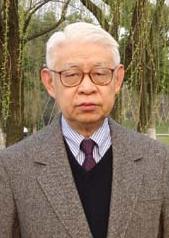
林毓生,复旦大学社会科学高等研究院学术委员。
Yu-sheng Lin (林毓生)
Personal
Born August 7, 1934, Shenyang, China
Married, two children
Home Address: 410 North Westfield Rd., Madison, WI 53717 (for all mails)
Home Telephone: (608) 833-6174 (with answering machine)
Office Address: Department of History, 3211 Mosse Humanities Building
University of Wisconsin-Madison, Madison, WI 53706
Office Telephone: (608) 263-1800 (department secretary can take message)
Office Fax: (608) 263-5302
Email: yslin@wisc.edu
Education
B.A., History, National Taiwan University, 1958
Ph.D., Social Thought, University of Chicago, 1970
Academic Positions
1962 Instructor in Chinese, Yale University (June-August)
1966-67 Visiting Assistant Professor of History, University of Virginia
1967-68 Acting Assistant Professor of History, University of Virginia
1968-69 Research at the East Asian Research Center, Harvard University, as
Research Associate of the Institute of International Studies,
University of Oregon (September-November, 1968)
Acting Assistant Professor of History, University of Oregon
(December, 1968-August, 1969)
1969-70 Post-doctoral Research Fellow, East Asian Research Center, Harvard
University
1970-75 Assistant Professor of History, University of Wisconsin-Madison
1975-81 Associate Professor of History, University of Wisconsin-Madison
1981-2004 Professor of History, University of Wisconsin-Madison
1983- Adjunct Research Fellow, Institute of History and Philology,
Academia Sinica, Taipei
1988- Honorary Professor, The Academy of Chinese Culture, Beijing
1988-90 Senior Research Fellow, Institute of East Asian Philosophies,
Singapore
2001-03 Distinguished Research Professor, Sun Yat-sen Institute for Social Sciences and Philosophy, Academia Sinica, Taipei
2002- Honorary Professor, The Chinese Academy of Fine Art (中国美术学院名誉教授), Hangzhou
2004- Honorary Professor, The School of History, Nankai University (南开大学历史学院名誉教授), Tianjin
2004- Professor Emeritus of History, University of Wisconsin-Madison (威斯康辛大学麦迪逊校区历史学系荣誉教授)
2006 Visiting Professor, The Chinese Academy of Fine Art (February-April); Department of History, Peking University (May-June)
2008 Visiting Professor, Centre for East Asian Studies, The Chinese University of Hong Kong (January-May)
Honors
1994 Elected to Membership of Academia Sinica (中央研究院院士)
Courses Taught
Introduction to East Asian History: China
Social and Intellectual History of China, 1400 BCE-589 CE, 589-1911, 1911-1949
Proseminar in Traditional and Early Modern Chinese Intellectual History
(various topics)
Seminar in Traditional and Early Modern Chinese Intellectual History
(various topics)
Seminar in Modern Chinese History
Seminar on the May Fourth Movement
Advanced Seminar in History (various topics)
History and Theory (Proseminar in Epistemology of Intellectual History)
Honors Seminar—Studies in History (Max Weber and Isaiah Berlin: The Demise of Utopia, Liberty, and Modernity)
Awards, Grants, Fellowships
University and Elinor Castle Nef Scholarship, 1960-61; William Volker Fellowship,
1961-63; University Fellowship, 1963-64, University of Chicago
H.B. Earhard Fellowships doing research at Academia Sinica, Taipei, July-December,
1964, at Hoover Institution, Stanford University, January-August, 1965, and at East
Asian Research Center, Harvard University, 1965-66
Research Grant, Joint Committee on Contemporary China, Social Science Research
Council and American Council of Learned Societies, 1969-70
UW-Madison Graduate School Summer Grant, 1971, 1972, 1978, 1979, 1984,
1985
The Knapp Bequest Committee Summer Grant for Improvement of Undergraduate
Instruction, 1973
Research Grant, Joint Committee on Contemporary China, Social Science
Research Council and American Council of Learned Societies, and Research
Appointment from the UW-Madison Graduate School, 1974-75
Faculty Development Grant (studying the implications of the philosophy of
Michael Polanyi for the discipline of intellectual history), II, 1978-79
Research Fellowship, Institute for Research in the Humanities, University of
Wisconsin-Madison, 1986-87
Senior Research Fellowship, Institute of East Asian Philosophies, 1988-90
Long-term research grant from the Institute of East Asian Political
Economy (formerly the Institute of East Asian Philosophies), 1990-95
Senior Scholar Research Grant, Chiang Ching-kuo Foundation for International Scholarly Exchange, 1999-2000
Residence at Rockefeller Foundation’s Bellagio Study and Conference Center (Villa Serbelloni, Bellagio, Italy), April--May, 2000
Papers Presented at International Conferences and Professional Meetings
Symposium on the 50th Anniversary of the May Fourth Movement (Harvard University,
1969); SSRC & ACLS Research Conference on Intellectuals and the Problems of
Conservatism in Republican China (Dedham, Massachusetts, 1972); the 29th International Congress of Orientalists (Paris, 1973); Annual Meetings of the Association for Asian Studies (Boston, 1974; Los Angeles, 1979; Boston, 1987; Los Angeles, 1993); the 7th & 8th Conferences of the International Association of Historians of Asia (Bangkok, 1977; Kuala Lumpur, 1980); SSRC & ACLS Research Conference on Lu Hsun and His Legacy in Commemoration of the Centennial of Lu Hsun’s Birth (Pacific Grove, California, 1981); the 31st International Congress of Human Sciences in Asia and North Africa (Tokyo and Kyoto, 1983); Conference on the History of Early Republican China (Academia Sinica, Taipei, 1983); International Symposium on Chinese Intellectual History (National Tsing Hua University, Hsinchu, 1984); Conference in Commemoration of the Centennial of the Birth of Carsun Chang (Taipei, 1986); International Conference on Confucianism and Modernization (Taipei, 1986); the 32nd International Congress for
Asian and North African Studies (Hamburg, 1986); Research Conference on Lu Hsun in
Commemoration of the 50th Anniversary of His Death (Beijing, 1986); the Second
International Conference on Sinology (Academia Sinica, 1986); International Conference
on the Thought of Liang Sou-ming (Beijing, 1987); Conference on the Problems of and
Prospects for Confucian Studies (Institute of East Asian Philosophies, Singapore, 1988);
International Conference on Chinese Historiography since 1912 (National Taiwan University, Taipei, 1989); International Conference on Cultural Change in Contemporary Taiwan (University of Chicago, 1989); International Conference in Commemoration of the 70th Anniversary of the May Fourth Movement (Chinese Academy of Social Sciences, Beijing, 1989); International Conference on Confucian Humanism and Modernization (Institute of East Asian Philosophies, Singapore, 1990); Conference on Culture and Society: Historical Reflections on Twentieth-Century China (East-West
Center, Honolulu, 1991); Conference on Cultural China: from May Fourth to River Elegy (Princeton University, 1991); Research Conferences on Intellectuals as Cultural Carriers during Transformations in Chinese History (New York, 1991, 1992); International Conference on Lu Hsun in Commemoration of His 110th Birthday (Sendai, Japan, 1991); International Conference on Hu Shih and Modern Chinese Culture (Chinese University of Hong Kong, 1991); Conference on Cultural China: Interpretations and Dissemination (Harvard University, 1992); International Conference on State, Society, and Individual in Contemporary Chinese Thought (University of Stockholm, 1993); Conference on the Cultural Development and Its Prospect in Taiwan (Taipei, 1993); Conference on Art and Culture in commemoration of the 40th anniversary of the National Museum of History (Taipei, 1995); Symposium Concerning the Conditions and Possibilities of International Understanding: China and the West in Dialogue (University of Trier, Germany, 1997); International Conference on the May Fourth Movement and 20th-Century China in Commemoration of the 80th Anniversary of the May Fourth movement (Peking University, Beijing, 1999); Conference: Chinese Legal and Political Theory in the 21st Century (University of Hong Kong, 1999); Conference on the Forms, Realities, and Prospect of Democratic Movement in Taiwan in Commemoration of the 30th Anniversary of the Death of Yin Hai-kuang (Taipei, 1999); the Third International Conference on Sinology, Academia Sinica (Taipei, 2000); Ford Foundation International Conference on Political Philosophy (Beijing, 2001); International Symposium on “Hayek’s The Constitution of Liberty: Revisited after 40 Years” (Obergurgl, Austria, 2001); International Conference: “Metteo Ricci and After: Four Centuries of Cultural Interactions between China and the West” (Hong Kong, 2001); Modernity and the Transformation of 20th-Centry Chinese Art: A Cross-Disciplinary Symposium (organized by China’s Central Academy of Fine Art and held at the City University of Hong Kong, 2006); International Conference in Commemoration of the 90th Anniversary of the Birth of Benjamin I. Schwartz (Shanghai, 2006); Thinking Ahead, Chinese Visions on a Planetary Scale: A Symposium (Melbourne, 2007); Liberty Fund Conference on “Liberty and Authority in the Far East: Western Perspective (Indianapolis, 2007); Liberty Fund Conference on “Economic Liberty and Political Freedom: Cause, Effect, or Incompatible? ” (Vancouver, 2008); Liberty Fund Conference on “The Evolution of Hayek’s Ideas on the Individual, Society, and Liberty” (Hermosa Beach, California, 2008).
Lectures at Harvard University, University of Chicago, Rutgers University, University of
Minnesota, Academia Sinica (Wang Shijie Memorial Lecture, 2002; Qian Siliang Memorial Lecture, 2006); National Taiwan University, National Cheng-chih University, National Taiwan Normal University, Tunghai University, Chinese Academy of Social Sciences, Peking University (a series of four lectures on Max Weber, 1988; the Second Ts’ai Yuan-p’ei Memorial Lecture, 1999), Fudan University; Xian University, Liaoning Academy of Social Sciences, Suzhou University, Nanjing University, National Tsinghua
University, (Hsinchu : a series of six lectures on the Evolution of Political Thought in Twentieth-Century China), Tsinghua University (Beijing), National University of Singapore, Tokyo University, Yeungnam University, Seoul National University, Hanlin University, Dong-A University, Shanghai Federation of Social Sciences Societies, Institute of East Asian Political Economy (Singapore), University of British Columbia, Nankai University, People’s University, Zhejiang University, Chinese Academy of Fine Art, Zhongshan (Sun Yat-sen) University, Liberty Fund, Northeastern University of Economics and Finance, Dalian, Central Academy of Fine Art, City University of Hong Kong, The Chinese University of Hong Kong (Yau Chen Ying Memorial Lectures, 2005); East China Normal University (Daxia Forum Lecture, 2006), The Hong Kong University of Science and Technology (2008).
Publications
I. Books
The Crisis of Chinese Consciousness: Radical Antitraditionalism in the
May Fourth Era (Madison: University of Wisconsin Press, 1979)
Chinese edition: tr. Mu Shanpei (Guiyang: People’s Press of
Guizhou, 1986; 2nd rev. ed., 1988)
Japanese edition: tr. Matsuyuki Maruyama and Cheng-ti Chen
(Tokyo: Kenbun Shuppan, 1989)
Korean edition: tr. Byung Joo Lee (Seoul: Taegwang
Munhwasa, 1990)
《殷海光‧林毓生书信录》(The Correspondence between Yin Hai-kuang and Lin Yu-sheng ), co-author (Taipei: Shih-ku Press, 1981, 2nd ed., 1984); With a new “Foreword” by Lin Yu-sheng (Shanghai: Shanghai Far Eastern Press, 1994, 2nd printing, 1996) ; An expanded and newly edited edition (Changchun: Jilin Publishing Group, 2008)
《思想与人物》(Thoughts and Personalities) (Taipei: Linking Publishing Company, 1982; 10th printing, 2001)
Beijing edition retitled 《中国传统的创造性转化》(The Creative Transformation of Chinese Tradition ) (Beijing: Joint Publishing Company, 1988; 2nd printing, 1992)
《政治秩序与多元社会:社会思想论丛》(Political Order and Pluralistic Society: Essays in Social Thought ) (Taipei: Linking Publishing Company, 1989; 3rd printing, 2001)
Yu-sheng Lin, Vita, Page 6
《热烈与冷静》(The Fusion of Passion and Reason: Selected Essays of Lin Yu-sheng), ed. Zhu Xueqin in a series entitled Harvests of Distinguished
Scholars ( Shanghai: Shanghai Literary Publishing Co., 1998)
II. Chapters in Edited Books or Papers in Conference Volumes
“Radical Iconoclasm in the May Fourth Period and the future of
Chinese Liberalism,” in Benjamin I. Schwartz, ed.,
Reflections on the May Fourth Movement (Cambridge,
MA: Harvard University Press, 1972), 23-58.
Chinese translation by Liu Cheng-yun, Hsu Ch’eng-ch’i and Huang Chin-hsing, edited and with a new Introduction by the author, in Chou Yang-shan, ed.,The
May Fourth [Movement] and China (in Chinese) (Taipei: China Times Press,
1979), 323-374.
“The Suicide of Liang Chi: An Ambiguous Case of Moral Conservatism,”
in Charlotte Furth ed., The Limits of Change: Essays on
Conservative Alternatives in Republican China (Cambridge,
Mass.: Harvard University Press, 1976), 151-168.
Chinese translation by Ch’en Chung-hsin and Ch’en Jo-shui, edited and with a new introduction by the author, in Chou Yang-shan and Yang Su-hsien, eds.,
Modern Chinese Thought and Personalities: Volume V, Conservatism (in Chinese) (Taipei: China Times Press, 1980), 155-182; Xu Jilin, ed., Essays on Twentieth-Century Chinese Intellectual History, Vol. II (Shanghai: Asian Center for Publications, 2000), 235-254.
“The Iconoclastic Thought of the May Fourth Period and the Crisis of Chinese
Consciousness” (in Chinese) in Chou Yu-shang ed., Essays on the May
Fourth Movement (in Chinese) (Taipei: Chengwen Publishing
Company,1980), 479-489.
“On the Relationship between Freedom and Authority” (in Chinese) in
Shao Yu-ming ed., Essays on Our Times (in Chinese) (Taipei:
I-cheng publishing Company, 1983), 437-446.
“The Origins and Implications of Modern Chinese Scientism in Early Republican
China: A Case Study--the Debate on ‘Science vs. Metaphysics’ in 1923,”
Proceedings of the Conference on the Early History of the Republic
of China, 1912-1927 (Institute of Modern History, Academia Sinica, 1984),
1181-1201.
“The Morality of Mind and Immorality of Politics: Reflections on Lu Xun,
the Intellectual,” in Leo O. Lee, ed., Lu Xun and His Legacy
(Berkeley: University of California Press, 1985), 107-128
Chinese translation by the author based on the draft prepared by Chen Chung-hsin in Reading Monthly (Beijing), 2 (February 1987), 38-57.
“Reluctance to Modernize: the Influence of Confucianism on China’ Search for Political Modernity,” in Joseph P. L. Jiang, ed., Confucianism and Modernizatioin (Taipei: Freedom Council, 1987), 21-33.
“The ‘Unity of Heaven and Man’ in Chinese Thought: Some Historical Implications,”
Proceedings of the Second International Conference on Sinology (Taipei:
Academia Sinica, 1989), Section of History and Archaeology, 251-264.
“A Reconsideration of the May Fourth Enlightenment: the
Ideologization of May Fourth Ideas” (in Chinese) in the Bureau of Research, Chinese Academy of Social Sciences, ed., The May Fourth
Movement and the Construction of Chinese Culture: Selected Papers
From the Conference Commemorating the 70th Anniversary of the
May Fourth Movement (in Chinese) (Beijing: the Social Sciences
Press, 1989), 139-146; Chou Yang-shan ed., From the May Fourth
Movement to the New May Fourth Movement (in Chinese) (Taipei:
China Times Press, 1989), 122-131.
“Transcending [the Limitations of] May Fourth for the Realization of [the
Goals of] May Fourth: A Reply to Mr. Wang Yuan-hua” (in Chinese)
in Lin Yu-sheng et al. May Fourth: Pluralistic Reflections (in Chinese)
(Hong Kong: Joint Publishing Company, 1989), 28-45.
“The Crisis of Chinese Consciousness and the Creative Transformation of
Chinese Tradition” (in Chinese) in The Editorial Department of the
Joint Publishing Company (Hong Kong) ed., The Sorrows of the Year
of Dragon (in Chinese) (Hong Kong: Joint Publishing Company, 1989),
45-51.
“On the Beijing Student Movement of 1989 and the Future of Chinese
Democracy: the Pessimistic Views of a Chinese Liberal” (in
Chinese), in Wang Kungwu et al. Whither China? (in Chinese)
(NJ: Global Publishing Company, 1990), 63-70.
The Historical Significance of Yin Hai-kuang’s Views of Democracy
and the Future of Democratic Theory in China” (in Chinese)
in Wei Cheng-tung et al. Liberal Democratic Thought and Culture:
Essays in Commemoration of the 20th Anniversary of the Death of
Yin Hai-kuang (in Chinese) (Taipei: Independent Daily News
Press, 1990), 214-225.
“A Brief Discussion of the Critique of Marxism by Western Liberalism” (in
Chinese) in Su Xiaokang ed., From the May Fourth [Movement]
to the “River Elegy” (in Chinese) (Taipei: Fengyun Publishing
Company, 1992), 291-304.
“The Historical Significance of the Debate on ‘Problems vs. Isms’”
(in Chinese) in Yu Ying-shih et al. Intellectuals during Transformations
in Chinese History (in Chinese) (Taipei: Linking Publishing Company,
1992), 63-71; Liu Qingfeng ed., Hu Shih and the Emergence of
Modern Chinese Culture (in Chinese) (Hong Kong: The Chinese
University Press, 1994), 3-10; Xu Jilin, ed., Essays on Twentieth-Century Chinese Intellectual History, Vol. I (Shanghai: Asian Center for Publications, 2000), 296-303.
Japanese translation: Chugoku: Shakai to Bunka, 8 (June, 1993), 252-258.
“The Significance of Benjamin I. Schwartz’s Intellectual Historiography”
(In Chinese) in Charles W. H. Fu and Yang-shan chou eds., Western
Sinologists on China (in Chinese) Taipei: Chengchung Publishing
Co., 1993), 79-93.
“The Chinese Intelligentsia and Politics” (in Chinese), in Yu Ying-shih
et al. New Views of the May Fourth [Movement] (in Chinese)
(Taipei, Linking Publishing Co., 1999), 87-102.
“Reflections on the ‘Creative Transformation of Chinese Tradition’ ” translated
from the Chinese by Michael S. Duke and Josephine Chiu-Duke with
further revision by the author in Karl-Heinz Pohl ed., Chinese Thought in
a Global Context: A Dialogue between Chinese and Western
Philosophical Approaches (Leiden: Brill, 1999), 73-114.
“Two Concepts of Political Order—Including a Discussion on Freedom and Toleration” (in Chinese), in Han Shuifa, ed., How is Social Justice Possible—Political Philosophy in China (Guangzhou: Guangzhou Publishing Company, 2000), 281-322.
“Radical Antitraditionalism in Twentieth-Century China, Chinese Marxism-Leninism, and the Maoist Utopianism” (in Chinese), in Xu Jilin, ed.,
Essays on Twentieth-Century Chinese Intellectual History, Vol. I (Shanghai: Asian Center for Publications, 2000), 441-488. (This paper was first published in The New History (Taipei: Institute of History and Philology, Academia Sinica), Vol. 6, No. 3 (September 1995), 95-154.
“An Impartial View of Hu Shih” (in Chinese), in Hao Bin and Ouyang Zhesheng eds, The May Fourth Movement and Twentieth-Century China (Beijing: Social Sciences Press, 2001), II, 834-842.
“On the Form, Substance, and Prospects of Democratic Development in Taiwan” (in Chinese), in Qu Haiyuan, Qian Yongxiang, and Gu Zhonghua eds. The Development and Problems of Liberalism (Taipei: The Laureate Press, 2002), 1-24.
“On the Formation of New ‘World Images’ as ‘Switchmen’ of Historical Tracks” (in Chinese), in The Cultural Foundation of China Times ed. The Construction of an Impartial and Just Society and the Space of Rationality (Taipei: China Times Press, 2003), 24-32.
“The Formations of Genuine Questions and Max Weber’s Ideal-Typical analyses” (in Chinese), Sifenxi Symposium, Vol. I, ed., Liu Ts’ui-jung (Taipei: Yunchen Publishing Co., 2006), 397-421.
“The Bewilderment of China’s Modernity” (in Chinese) in Song Xiaoxia ed., “Self-Awareness” and China’s Modernity (Hong Kong: Oxford University Press, 2006), 3-25.
III. Articles
“The Evolution of the Pre-Confucian Meaning of Jen 仁 and the Confucian Concept of
Moral Autonomy,” Monumenta Serica, 31 (1974-75), 172-204.
With Benjamin I. Schwartz, “Some Reflections on Modern and Contemporary Chinese
Ideas, Culture, and Politics: A Dialogue,” (A bilingual article in English and
Chinese) Ming Pao Monthly, 9:6 (June 1976), 3-20.
“The Radical Iconoclasm of Lu Hsun” Chine Moderne, Actes du XXIX
Congres Internatioinal des Orientalistes, 1977
“Notes on the Themes in The Crisis of Chinese Consciousness; Radical
Antitraditionalism in the May Fourth Era,” Chinese Republican
Studies Newsletter, 5:1 (October 1978)
“Cultural Revolution in Modern China,” Proceedings of the Seventh Conference
of the International Association of Historians of Asia (Bangkok:
Chulalongkorn University Press, 1979)
“Reflections on the Ideas of Freedom and Toleration of Hu Shih, Mao Tzu-shui,
and Yin Hai-kuang--Including a Discussion of the ‘Ideal-typical’ Analysis
in Intellectual History,” (in Chinese) The China Tribune, 256 (May 1986),
52-57; 257 (June 1986), 52-62.
“Some Reflections on the Historical Implications of Cultural Contacts between China
and the West: An Essay in Commemoration of the Centennial of the Birth
of Dr. Carsun Chang,” (in Chinese) The Contemporary, 4 (August 1,
1986), 44-51.
“The Distinctive Characteristics of Lu Xun’s Thought--Including a Discussion of Its
Relationship to the Chinese Cosmology,” (in Chinese) The Lu Xun Studies Monthly, 55 (November 1986), 5-11.
“Some Observations on Hu Shih’s Thought--Including a Discussion of the
Ambiguities of His ‘Ibsenism’,” (in Chinese) The Literary Supplement of the
United Daily News, special issue, May 4, 1986.
“The Problematique of Lu Xun’s Views of Politics,” (in Chinese) Literary Stars
Tribune, 112 (October 1, 1987), 24-32.
“The Debate between Hu Shih and Liang Sou-ming Concerning Eastern and Western
Cultures and Their Philosophies and its Historical Significance,” (in Chinese)
Chinese Culture and Chinese Philosophy, 1988 (Beijing: Joint Publishing Company, 1990), 138-154.
“Concerning The Crisis of Chinese Consciousness: A Reply to Sun Lung-kee,” (in
Chinese) The 21st Century, 3 (February 1991), 136-150.
“Why Is It So Difficult to Develop Civil Society in China?” (in Chinese),
The China Times Weekly (Taipei and New York), 14 (April 5-11, 1992),
58-64; 15 (April 12-18, 1992) 38-42.
“Friedrich A. Hayek (1899-1992): the Passing of an Intellectual Aristocrat”
(in Chinese), Hong Kong Economic Journal, 16:2 (May 1992), 28-30,
reprinted in The Literary Supplement, United Daily News (Taipei),
May 1, 1992, and Reading Monthly (Beijing), 9 (September 1992), 57-60.
“Liberty Is Not Emancipation: Friedrich A. Hayek (1899-1992)’s
Philosophy of Freedom” (in Chinese), Hong Kong Economic Journal
16:4 (July 1992), 91-94, reprinted in The Literary Supplement, United
Daily News (Taipei), July 2-3, 1992.
“The Nature and Implications of Lu Xun’s Individualism--Including a Discussion of His Concept of National Character” (in Chinese), The 21st Century,
12 (August 1992), 83-91, reprinted in The Lu Xun Studies Monthly 140
(December 1993), 32-38.
Japanese translation: “Rojun no Kojinshugi no seihitsu to imi—“kokuminsei” mondai o
kenronsee” tr.,Ryosuke Ebina, Chugoku: Shakai to Bunka, 7(June 1992), 235-245.
“The Chinese Enlightenment in the May Fourth Era from the Perspectives of the
Scottish Enlightenment,” (in Chinese), Reading Monthly (in Chinese),
1 (January 1993), 89-99.
“Anti-traditionalism in Modern and Contemporary China and Mao Zedong’s
Utopianism,” (in Japanese) Iwanami Lectures on Modern Thought (Tokyo:
Iwanami Shoten, 1994), vol. 15, 225-260.
The Creative Transformation of Chinese Traditioin--Further Reflections,” (in Chinese)
The Intellectual (New York), vol. 10, no. 1 (Autumn, 1994), 22-30;
Res publica (Beijing), I (November 1995), 230-257; Xue shu ji lin (Shanghai), VI
(1995), 191-222; Proceedings of theConference on Art and Culture in Commemoration of the 40th Anniversary of National Museum of History (Taipei: National Museum of History, 1996), 171-206 (a revised and extended version, including extensive replies to comments by discussants and questions from the floor). [English translation of this article listed above in II.]
“Taiwan’s Political Situation in the 1950s and Yin Hai-kuang’s Influence on the
Formation of My Thought,” (in Chinese) The Academic Monthly (Shanghai:
Shanghai Federation of Social Sciences Societies) 305 (October, 1994), 86-94.
“Liberty, Democracy, and the Weberian Concept of the Ethics of Responsibility
(in Chinese),” Cultural China (Vancouver, B.C.), vol. 2, no. 3 (September
1995), 65-72.
“On China’s Road to Modernization and Internal Cultural Predicament: A Dialogue
with Liang Yen-ch’eng (in Chinese),” Cultural China, vol. 3, no. 1 (March
1996), 6-15.
“Two Dimensions of Intellectual Crisis in Contemporary China (in Chinese),”
Reading Monthly (Beijing), 213 (December 1996), 40-48.
“A Critique of the New Confucianist Theory of ‘Extracting Democracy from
Chinese Tradition’ and of Li Zehou’s Idea of ‘Adopting Western Material
Substance for China’s Practice of Modernization’ (in Chinese),” Ming Pao, Section D, December 30, 1996.
“A Critique of Max Weber’s Views of Confucianism” (in Chinese), Journal of the
Graduate School, Peking University, 57 (1999), 11-17.
“A Dialogue between Confucius [and Mencius] and Kant concerning Human Rights”
(in Chinese), Ming Pao Monthly, vol. 35, no. 1 (January 2000), 59-63.
“Conditions of Statesmanship” (in Chinese), China Times Literary Supplement, May 15-
19, 2000.
“Remarks at Harvard University Memorial Service for Benjamin I. Schwartz (1916-1999),” Philosophy East and West, Vol. 51, No. 2 (April 2001), 187-188.
“Introduction to Benjamin I. Schwartz’ ‘China and Contemporary Millenarianism—Something New Under the Sun’,” Philosophy East and West, Vol. 51, No. 2 (April 2001), 189-192.
“Tentative Suggestions for the Proper and Viable Developments of the Humanities and Social Sciences,” (in Chinese), Newsletter of the Humanities and Social Sciences
(National Science Council, Taiwan) June, 2001, 1-6.
IV. Forthcoming Publications
1. 〈人文与社会研究发展刍议〉(修订版),邓正来主编《中国社会科学季刊》(2008)
2. 《中国激进思潮的起源与后果──秩序危机、反传统、乌托邦》(台北:联经出版公司〔繁体字版〕;上海:三辉图书〔简体字版〕,2009)
3. “The Bewilderment and Agony of China’s Quest for Modernity: The Rise of Political Religion,” eds. Gloria Davies, et. al., in a symposium volume, 2009.